
Chad
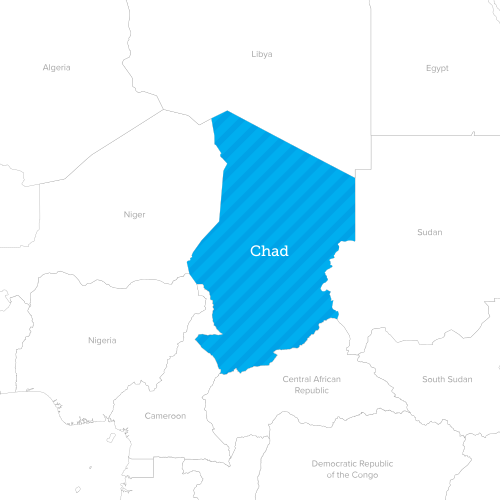
When violent clashes threw Sudan into turmoil in April 2023, large numbers of people left their homes to seek safety in neighboring Chad. Since then, Chad has become host to more than 45% of Sudanese refugees—more than any other country—putting a significant strain on already underserved host communities.
International Medical Corps first began operations in the country during the 2004 Darfur crisis, and paused our work there in 2020. However, when the 2023 Sudanese refugee crisis began, we renewed our work—initially to support cross-border operations to deliver pharmaceuticals into Sudan, and eventually to provide primary healthcare and nutrition interventions for Sudanese refugees and host communities in Chad.
19.1 million
16.7 years
58/62 years
male/female
The Challenges
Overwhelming need
6 million require humanitarian assistance.

Poor nutrition
3.4 million are experiencing severe food insecurity.

Climate vulnerability
Challenges include desertification, sudden-onset flooding and environmental degradation.

Disease outbreaks
Chad is currently experiencing outbreaks of hepatitis E, measles and mpox.
Our Response

Integrated Healthcare and Nutrition
Sudanese refugees arrive in Chad by the thousands each month. They shelter in refugee camps—including Dougui, where our teams provide integrated healthcare and nutrition services to Sudanese refugees, returnees and host communities.
Our programs also include maternal and newborn health services and mental health and psychosocial support (MHPSS). Our nutrition services focus particularly on children under 5 and pregnant and lactating women.
Our Work

The Genocide in Darfur
International Medical Corps provided healthcare services to more than 50,000 people—including refugees and host community members—in Chad during the genocide in Darfur. Our staff of 150 local and 15 international workers provided nutritional assistance and primary healthcare through mobile and fixed clinics to eight host communities and refugee camps.
We also built local response capacity by training midwives, community health workers, doctors and nurses. To improve Chad’s healthcare infrastructure, we constructed new health clinics and provided health centers with critical medicines and supplies.
Conflict in the Lake Chad Region
When violence in the Central African Republic flared in early 2018, our teams were quick to respond, providing medical consultations to nearly 64,000 people and outpatient care to nearly 7,000 children in the first nine months of the conflict.
Our Impact in 2025
Frequently Asked Questions
-
How many Sudanese have fled to Chad?
As of March 2025, UNCHR estimates that almost 770,000 people have fled Sudan to Chad because of the conflict that began in April 2023. Since then, refugees and returnees have entered Chad from Sudan by the thousands every month. UNHCR estimates that the number will reach approximately 973,000 by the end of 2025.
-
What is life like for Sudanese refugees in Chad?
Refugees who arrive in Chad from Sudan report that they need basic items such as a comfortable place to sleep, kitchen utensils and personal hygiene items. Almost all Sudanese families who shelter in Chad are traveling with school-age children. For women and girls, violence is an immediate, daily and underreported threat. And, though humanitarian efforts are underway to provide water, hygiene and sanitation services, access remains difficult, as does access to shelter, basic nutrition and healthcare.
-
Why are refugees seeking shelter in Chad?
As Sudan’s neighbor to the west, Chad is a natural destination for people fleeing the Sudanese civil war—especially those living in Darfur—despite the difficult journey, which most take on foot, sometimes walking for days to reach the border. Since the conflict in Sudan started in April 2023, Chad has remained open to refugees from Sudan while closing its borders to most other people. Host communities in Chad have welcomed the Sudanese refugees, even as the exodus has strained Chad’s available resources. Today, Chad hosts the largest number of refugees from the Sudanese civil war.