Haiti
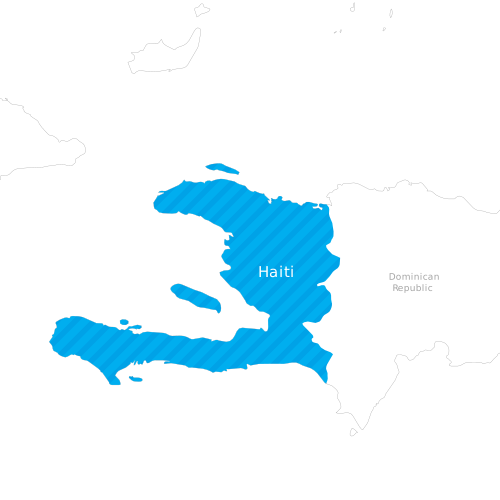
The Republic of Haiti is a small Caribbean nation that faces significant political, economic and humanitarian challenges. The country is frequently plagued by natural disasters and is ill-equipped to deal with their aftermath, often leaving many people without ready access to electricity, water, sanitation or health care.
International Medical Corps has been working in Haiti since 2010, when a magnitude 7.0 earthquake devastated the island nation. Our teams immediately provided a broad range of lifesaving services, including mobile medical units and water, sanitation and hygiene activities. We were one of the very first organizations to respond to an unprecedented cholera outbreak in Artibonite in the north (where the initial cases developed) that year. In October 2016, when Hurricane Matthew hit Haiti, we once again provided emergency relief and medical care. We quickly initiated cholera treatment and prevention activities and participated in the largest-ever emergency cholera vaccination campaign in history.
On August 14, 2021, a 7.2 magnitude earthquake struck the Tiburon Peninsula in Haiti, a little more than 90 miles west of the capital, Port-au-Prince, killing 2,200 people and injuring more than 12,000. International Medical Corps deployed our Fixed Type 1 EMT in response. Through the facility, we were able to provide medical care to thousands of people, mental health and gender-based violence support to many more, and supply local healthcare providers with medicines and equipment.
The Challenges

Poor Nutrition
Over 50% of the population is undernourished

Recurrent Cholera
Cholera has sickened nearly 800,000 people and led to nearly 10,000 deaths since the first outbreak in 2010
Our Response

Nutrition
Food insecurity and malnutrition is a long-standing challenge in Haiti. Even before the 2010 earthquake, Haiti suffered from one of the heaviest burdens of hunger and malnutrition in the Western Hemisphere, where a near-majority of households are undernourished and 30 percent of children suffer from chronic malnutrition. The 2010 earthquake, followed by Hurricane Sandy in 2012 and then Hurricane Matthew in 2016, not only aggravated existing difficulties, it lessened the government’s ability to manage the food situation.
Today, International Medical Corps is working in Fonds Verrettes to mitigate the impact of El Niño on the nutritional status of vulnerable people, particularly children. We are focusing on strengthening the nutrition surveillance system, improving access to nutrition services and implementing malnutrition interventions. In our health facilities and communities, we do routine screening for malnutrition, focusing on children aged 0-59 months. Most children are treated in our outpatient therapeutic program, while those with Severe Acute Malnutrition and medical complications, as well as children under 6 months, are treated in our in-patient stabilization center. Our staff are also working with local health facility staff and community health volunteers on Infant and Young Child Feeding (IYCF) to protect and support feeding and hygiene. In addition, our teams are training health facility staff, NGO partners and other caregivers on best practices for IYCF and community management of acute malnutrition (CMAM).

Cholera Treatment and Prevention
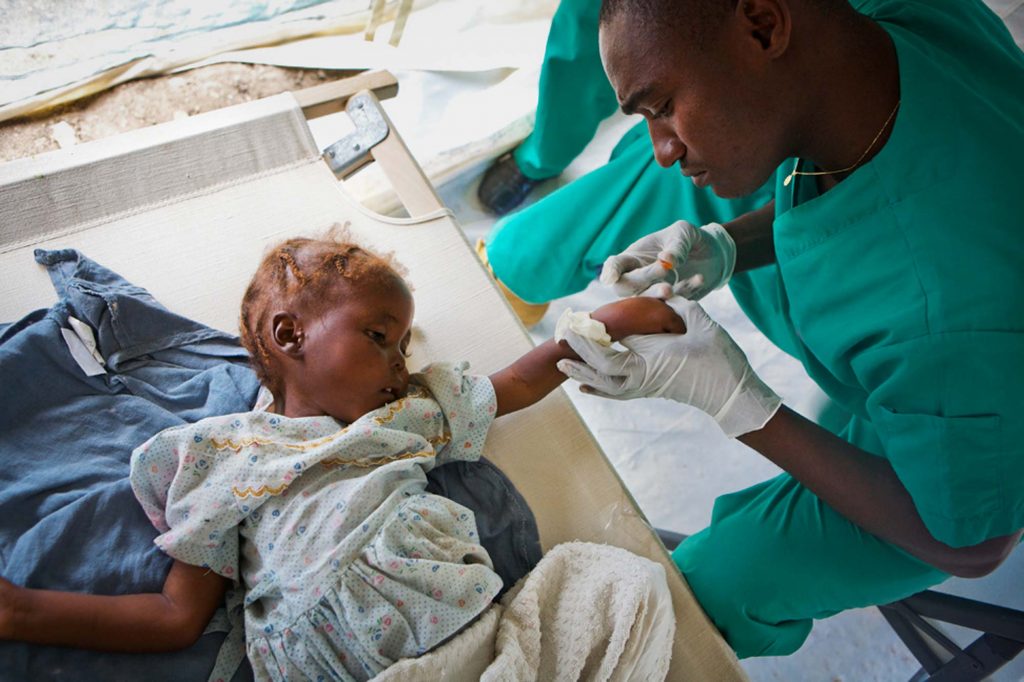
Cholera first broke out in Haiti in the fall of 2010 and has plagued Haitian families ever since. Nearly 800,000 people have been sickened by the disease and almost 10,000 Haitians have died. The rainy season brings a resurgence of cases every year, as most Haitians still lack access to clean water and sanitation facilities, which creates fertile ground for cholera to spread.
Building on International Medical Corps’ experience preventing and responding to cholera in the wake of the first outbreak in 2010 and the surge in cases that followed Hurricane Matthew, International Medical Corps, with funding from the World Bank, is providing cholera services to nearly 4,000 people in Haiti’s Nord and Artibonite departments.
We Were There: Devastating Earthquakes
International Medical Corps was on the ground following the devastating 2010 earthquake in Haiti, and again in 2021 when another earthquake rocked the country.