Sanitation
Water, Sanitation & Hygiene
Ensuring proper sanitation remains a significant global challenge.
Despite the progress achieved in recent years, an estimated 545 million people still use unimproved sanitation facilities. Almost 420 million people practice open defecation, the vast majority of them in rural areas. Without adequate sanitation, communities are highly vulnerable to diarrhea and other diseases, and risk contamination of their drinking water. Half of all hospital beds in developing countries are occupied by people with water- and sanitation-related diseases, including diarrhea, pneumonia, eye and skin infections, malaria, cholera and typhoid. International Medical Corps, which provides sanitation facilities during emergencies to help prevent the further spread of disease, works with communities to build sustainable, safe and adequate sanitation solutions.
Our Response
International Medical Corps considers improvement of sanitation infrastructure and services to be essential components of our comprehensive approach to healthcare. Adhering to our philosophy of working closely with those most affected by disasters, we actively engage communities and relevant authorities in the development and implementation of sustainable WASH programs. We also support communities in the early recovery or development phase after crises through a mix of community-centered sanitation approaches.
Here are just a few examples of our work.
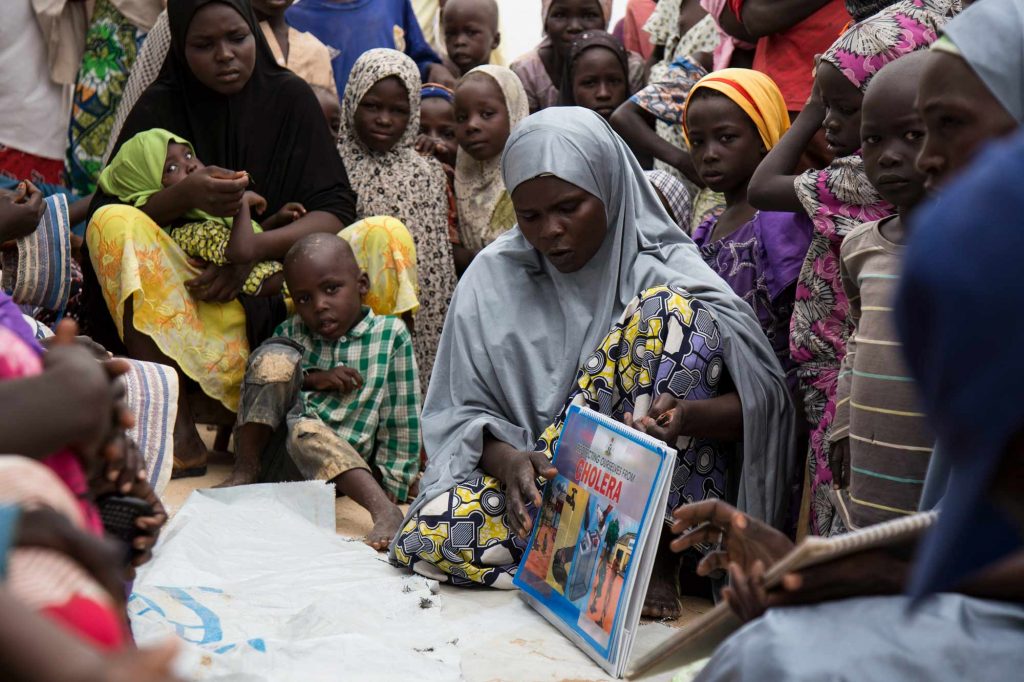
NORTHEASTERN NIGERIA: International Medical Corps is working to improve access to safe water, sanitation and hygiene tens of thousands of people in Nigeria. We work in camps and communities of internally displaced people to enhance sanitation. We build and manage sanitation facilities, provide garbage cans and install drainage systems while our community volunteers educate families on hygiene and the prevention of waterborne diseases such as cholera. We also improve WASH in the health facilities we support by installing handwashing stations, latrines and showers, and by providing training in how to increase sanitation coverage through community-led sanitation.
SOMALIA: Our successful community-led total sanitation approach has led to positive changes in villages throughout Somalia by mobilizing communities to assess sanitation, identify issues and act. Improving hygiene is also key. As a result of monitoring, villages have realized the dangers of open defecation; through community effort, they’ve stopped the practice of open defecation by building latrines.
Our WASH services benefited nearly 4 million people in 2025.
In 2025, we constructed or rehabilitated nearly 3,000 latrines, directly benefiting nearly 400,000 people.