WASH in Nutrition
Water, Sanitation & Hygiene
An estimated one in nine people suffers from chronic undernourishment, which is caused by insufficient food intake as well as by health and environmental factors, such as poor WASH. This leads to diseases that prevent nutrients from being sufficiently absorbed by the body. The World Health Organization estimates that half of all undernutrition is associated with infections caused by poor WASH, such as diarrhea, intestinal worms and environmental enteric dysfunction.
Poor nutrition, in turn, lowers resistance to infections and increases mortality from diarrheal diseases and respiratory infections. To break this vicious cycle, International Medical Corps integrates WASH components into our nutrition and health programming.
Our Response
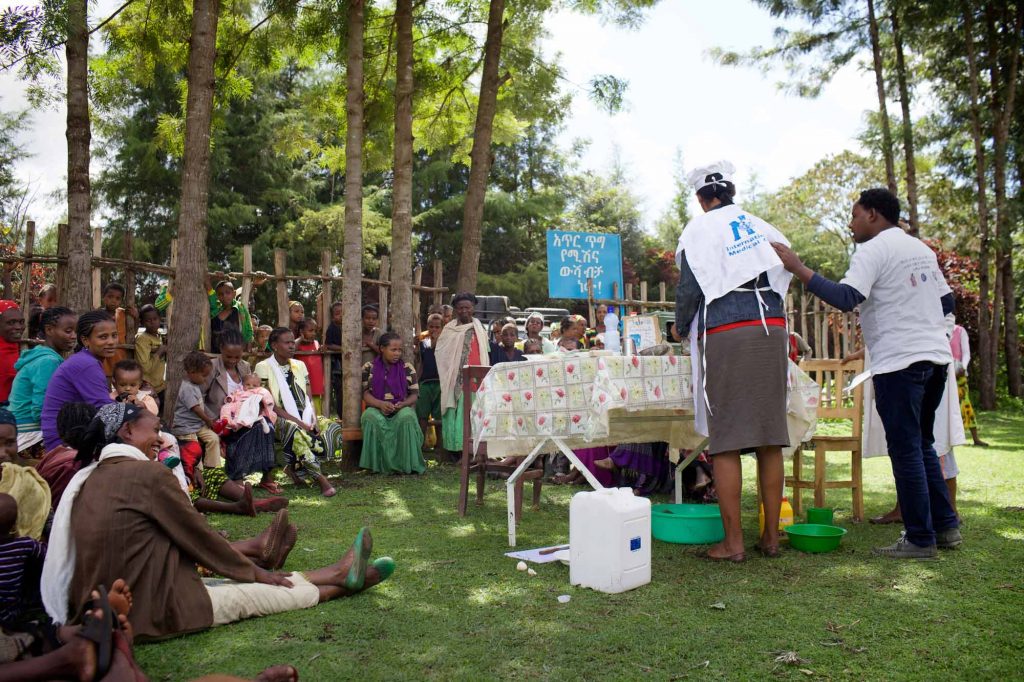
International Medical Corps integrates WASH and nutrition in its health programming by providing clean water at feeding centers and in communities. We also provide training on safe water collection, storage and point-of-use treatment.
Our programs promote safe disposal of waste, and work to eliminate the practice of open defecation.
We train mothers and caregivers on the importance of handwashing with soap before preparing food and breastfeeding babies. We also stress the importance of good food hygiene: preparing food on clean surfaces, covering cooked food and separating cooked and uncooked meats.
Here are a few examples of our integrated WASH programs.
WASH in Nutrition: At the community level, community health workers and mother support groups disseminate WASH and nutrition messages via community health workers. We also provide WASH supplies, such as soap and other items, through groups dedicated to infant and young-child feeding and through community management of acute malnutrition in a range of countries, including the Democratic Republic of the Congo, Somalia and Ukraine.
WASH in Services Related to Violence Against Women and Girls: Because the WASH facilities we create at the community level are segregated and accessible, they contribute to the prevention of violence against women and girls.
In Zimbabwe, we provide capacity-building support to enhance maternal nutrition, child feeding, breastfeeding, and health and hygiene education for those we serve. We educate participants in community health clubs (CHCs) in health and hygiene, and conduct sessions that include discussions on nutrition gardens and eco stoves. Our annual WASH meetings, held alongside environmental health meetings, strengthen the integration of WASH messages into nutrition initiatives. We ensure that community-based facilitators within CHCs, such as nutrition care group volunteers, play a key role in health, hygiene and nutrition activities. We engage traditional leaders to involve men and mobilize communities. Through training, community activities and advocacy, CHCs promote awareness and foster resilient hygiene and sanitation practices.
In Yemen, we lead a community-based WASH and nutrition program across multiple areas, working to reduce stunting by at least 20%. Only one-third of people in Yemen have access to safe drinking water, while only one-quarter have modern sanitation services. We conduct community mapping, assessments and action plans, integrating WASH into our nutrition efforts. WASH-related initiatives include village health committees in nearly 350 villages, and a community-led total sanitation program to end open defecation.
In Sudan, we combine WASH with maternal and newborn health initiatives to provide access to clean water and sanitation in health clinics and hospitals. This helps prevent the spread of disease and infection, resulting in improved health outcomes. Additionally, we provide training to help local health workers deliver education and resources in their communities. By combining these areas, we can boost the health and well-being of families and communities.
Malnutrition is the root cause of death in half of all children under 5 globally. Diarrheal disease—often caused by dirty water or lack of good hygiene—is the third leading cause of death in children under 5, killing about 444,000 children each year.
International Medical Corps admitted nearly 250,000 children under 5 to targeted supplemental feeding programs in 2025.
In 2025, International Medical Corps established nearly 1,500 WASH and health committees in communities across seven countries.