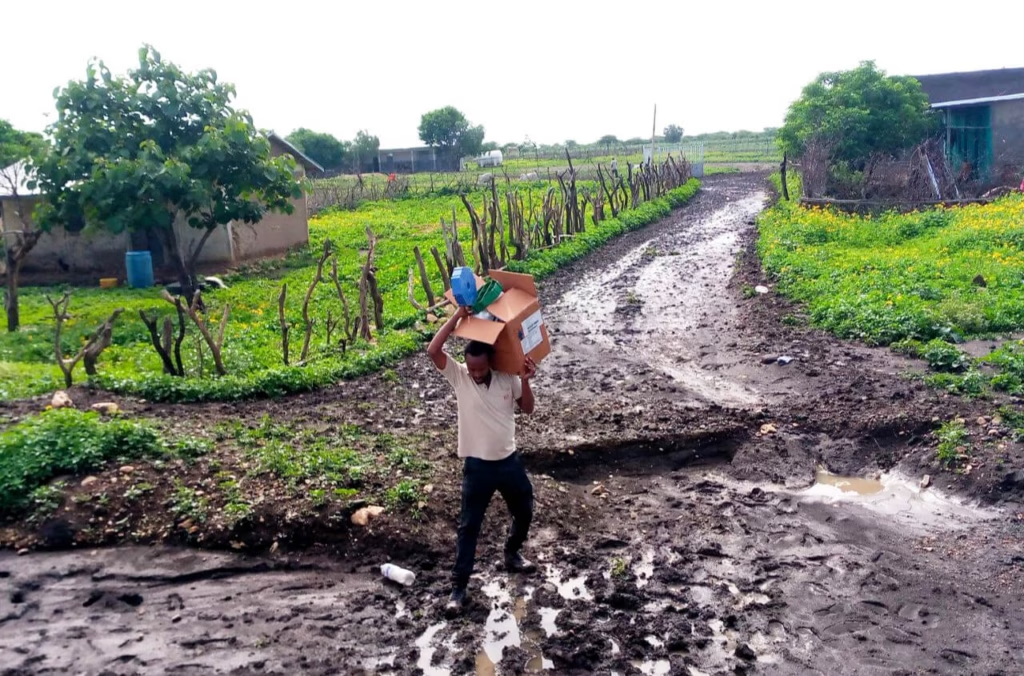
“If we saw the road wasn’t accessible, we carried the medicine, equipment and supplies on our backs and traveled on foot,” explains Henock Million, International Medical Corps’ Health and Nutrition Program Manager in Ethiopia. “Some of the communities we served lived in villages where no other healthcare exists. We did everything we could to reach them.”
Though in his current role Henock provides technical support and guidance to field teams, at the time he was a medical officer on one of International Medical Corps’ mobile health and nutrition teams (MHNTs), often traveling to hard-to-reach areas to provide essential healthcare to displaced families. The importance of critical services in areas like this was familiar to him.
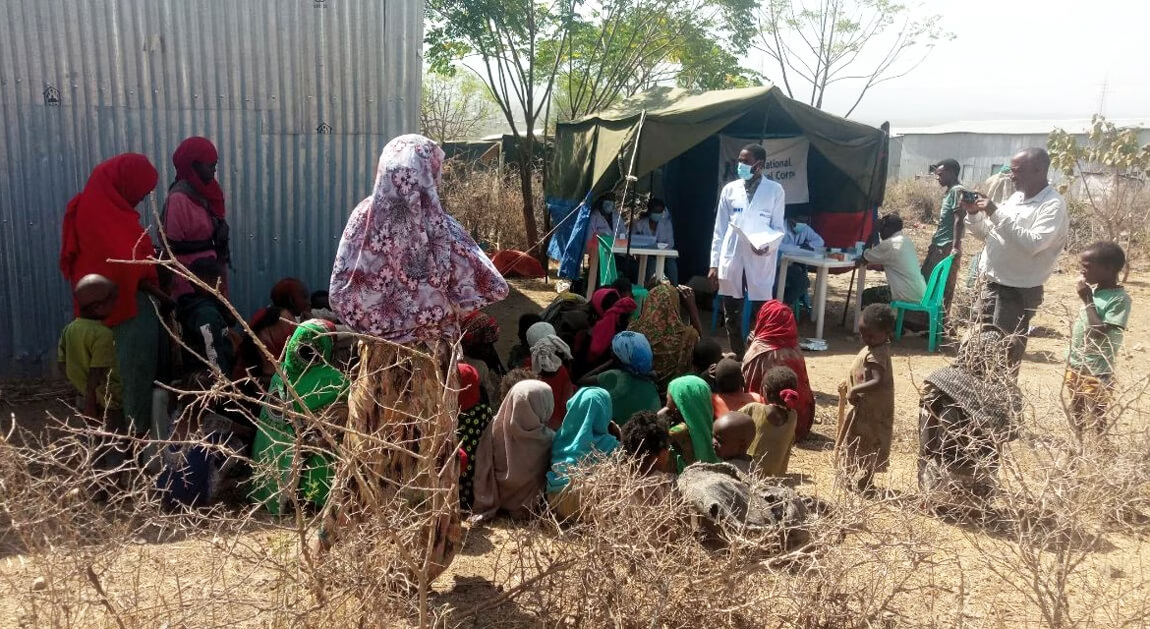
Henock was born in Jarso, a rural area of eastern Ethiopia, where schools and health facilities lacked basic infrastructure and resources: classrooms didn’t have enough desks and chairs, so students sat on rocks, and his family relied on traditional healers for healthcare. When he was six, his family moved to a nearby urban area so their children could receive a better education. Unfortunately, tragedy soon struck. His father passed away, and soon after, his mother. Henock and his four younger siblings—three brothers and a sister—moved in with their maternal grandmother.
“As the oldest child, I was responsible for caring for my family, setting a good example for my siblings and supporting them from early childhood,” Henock says. “Those challenges shaped my path. They made me compassionate and resilient, and taught me leadership and how to make decisions in difficult situations.”
Those experiences also influenced his decision to become a nurse, because it offered a direct way to care for people experiencing illness and hardship.
“Nursing means providing compassionate care for the patient, the family and the community,” Henock explains. “It is a frontline profession, and that is why I chose it.”
When he was 17, Henock enrolled in Harar Health Science College, earning his nursing diploma and eventually his bachelor’s degree in public health. He first worked for International Medical Corps as a nutrition supervisor, then joined a local hospital for a year as a nurse before re-joining International Medical Corps in September 2013 as a nurse focused on the community-based management of acute malnutrition (CMAM). He has been with International Medical Corps ever since, going on to serve as a medical officer and senior emergency response officer before moving into program management.
A Career Built on Frontline Service
Henock’s progression—from nurse to emergency responder to program manager—has kept him closely connected to frontline service. Throughout his career, he has responded to malnutrition, cholera, measles, conflict and displacement, and some of the people he met remain vivid in his memory.
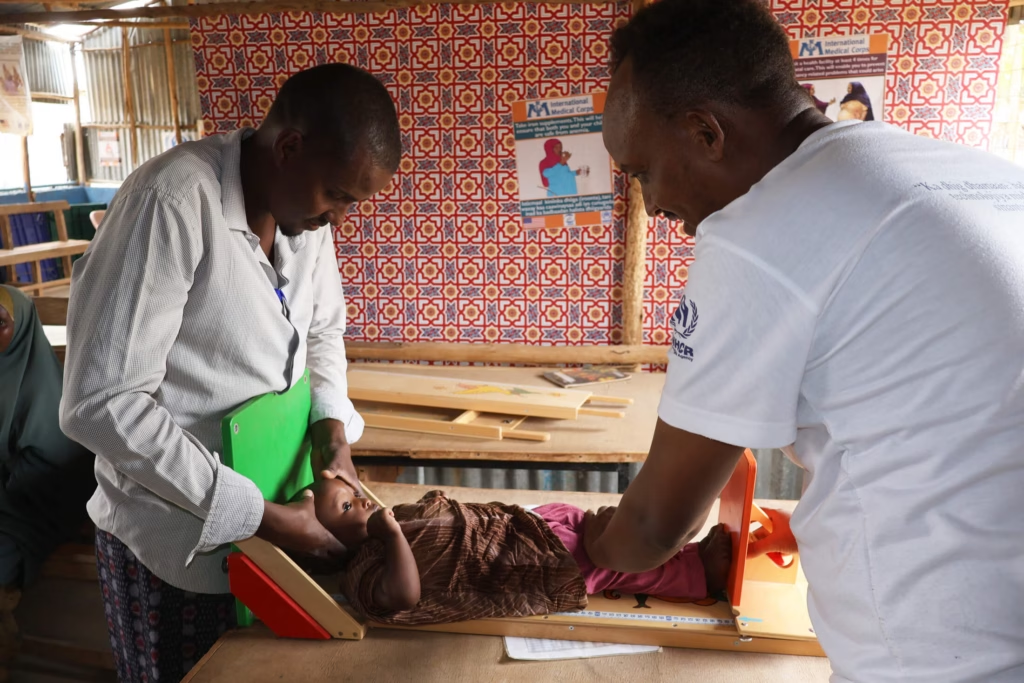
When Henock was working as a CMAM nurse, he recalls a mother arriving for care with a severely malnourished child who was lethargic and experiencing medical complications. Henock assessed the child and concluded that he needed treatment beyond what was available at the field site, so the team transported the mother and child in an International Medical Corps vehicle to a better-equipped health center, also supported by International Medical Corps.
There, health workers treated the child for malnutrition, addressing medical complications, providing therapeutic feeding, administering appropriate medications and conducting close clinical monitoring. After two weeks, the child recovered.
“His smile returned,” Henock says. “And his mother was very happy.”
For Henock, the moment demonstrated not only the importance of reaching children quickly but also of how successful treatment can build trust in healthcare. That same combination of urgency and trust continues to shape how he approaches emergencies.
Responding When Every Minute Matters
Henock compares emergency responses to using a fire extinguisher: responders must act quickly to control a fire before it causes greater damage and loss. The same is true during an outbreak of disease. Delays in mobilizing staff, medicines and other resources can cost lives. For Henock, emergency response means assessing needs quickly and reaching affected communities fast, before a crisis deepens.
Henock saw the value of rapid, coordinated action during a cholera outbreak in February 2025. Working alongside local authorities, he and our in-country team responded to a sudden surge in cases by constructing critical health facilities, coordinating case management and infection-prevention measures—including distributing personal protective equipment and cholera treatment kits—and training local health workers. The experience reinforced his belief that acting quickly and collaboratively can protect communities and prevent an emergency from becoming worse.
“Behind every emergency are people and families whose lives and dignity matter,” he says. “This reminds me to respond not only with urgency, but also with compassion, respect and a strong commitment to helping people in need.”
Because of his experience responding to emergencies, Henock understands the pressures facing frontline staff and the importance of earning community trust. This understanding enables him in his current role to better coach staff, provide technical guidance, manage resources and help teams respond to the needs they encounter. It begins, he says, with listening.
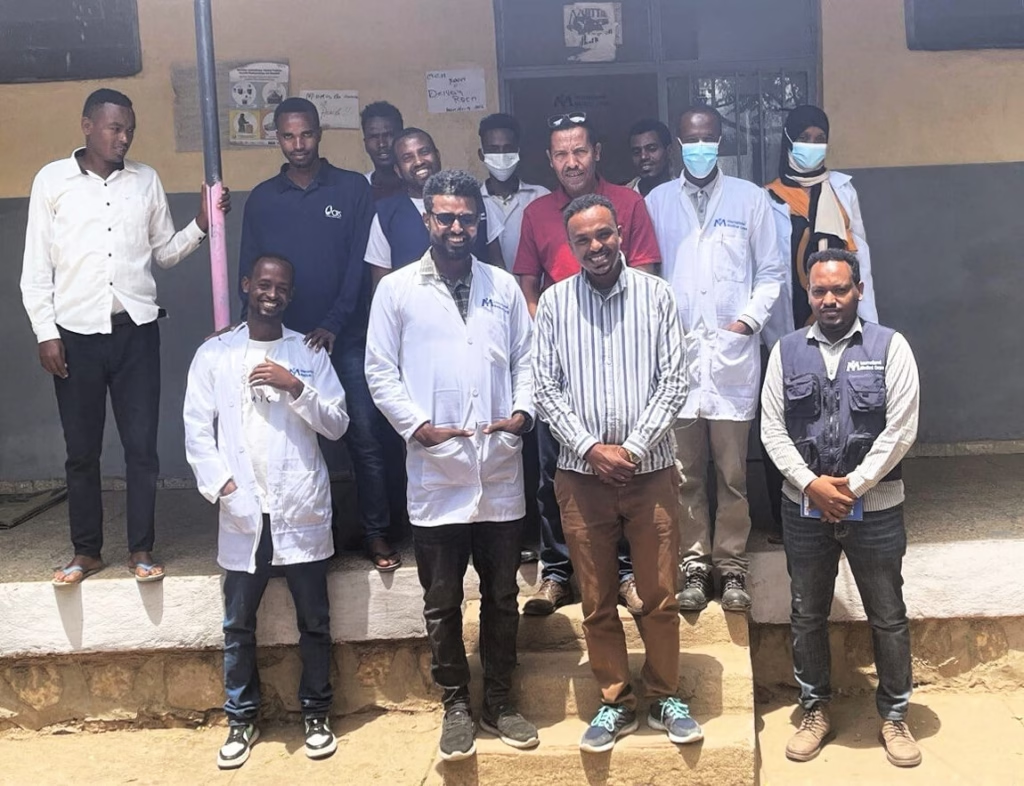
“I try to build trust through clear communication, honesty and consistency,” Henock explains. “I do not come into a community assuming that I have all the answers. Instead, I work with local healthcare workers, community leaders and community members. I value their knowledge and experience.”
Searching for Solutions
Listening to communities helps Henock respond to immediate needs while informing his search for longer-term solutions. Currently pursuing a master’s degree in public health with a focus on epidemiology, his research examines the factors contributing to malaria transmission as well as the burden of this relentless disease. He hopes that his findings will provide evidence to support more effective malaria-prevention and control strategies. This work reflects the commitment that has guided him since childhood: understanding the challenges people face and looking for ways to help, in both the short and long term.
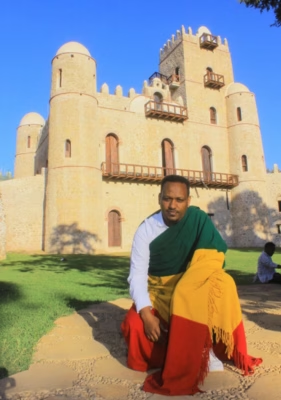
That commitment is rooted not only in the challenges Henock has witnessed but also in his deep appreciation for Ethiopia and its people. Though conflict, displacement, malnutrition and outbreaks of infectious disease can dominate headlines, he wants people to see the country as more than a place of crisis. He describes a beautiful country with many cultures, languages and religions—and communities where members celebrate one another’s holidays and live together peacefully.
From helping to care for his siblings to carrying medicines to families cut off from healthcare, Henock has built his life around compassionate service—and the belief that no one should be beyond the reach of care.
Learn more about our lifesaving health and nutrition programs, and our work in Ethiopia.