
Iraq
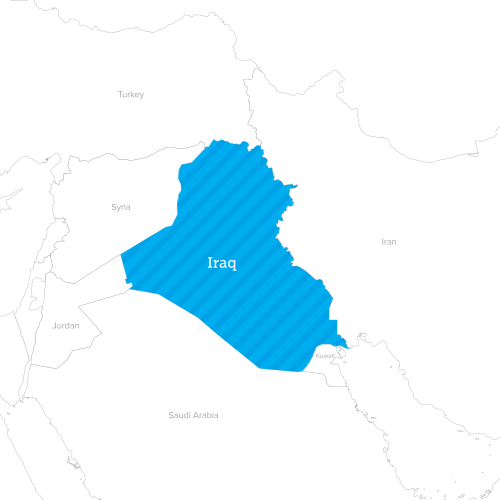
After years of armed conflict, sectarian violence and political instability, more than a million Iraqis continue to be internally displaced, while at least 3 million need humanitarian assistance.
International Medical Corps was among the first international nongovernmental organizations to establish lifesaving humanitarian programs in Iraq in the wake of the 2003 Iraq war. Since then, we have helped those in need in all of the country’s 18 governorates.
46 million
300,000+
3 million
The Challenges
Displacement
Following the conflict, more than a million Iraqis remain displaced within their own country. The majority live in camps or informal settlements, and often face difficulties in accessing public services, education and social protection.

Unemployment and Poverty
Around 40% youths in the country are unemployed, which exacerbates the poverty situation. Rural areas have higher poverty rates, reflecting disparities in access to quality health, education and infrastructure.

Overburdened Services
Public services like healthcare and mental health services are overwhelmed, leaving many people with inadequate access.
Our Response

Community Health
Our community health workers play a vital role in connecting people with project services by conducting regular door-to-door visits and delivering tailored messages about child protection (CP), violence against women and girls (VAWG) and mental health and psychosocial support (MHPSS) to communities. They identify people most at risk and refer them to available services. Our team also conducts weekly educational activities to engage communities and facilitate in-depth discussions on various topics, contributing to community awareness and addressing issues around health and well-being.
To ensure that our outreach efforts are effective, we conduct regular assessments to identify the specific needs and challenges of the community. This enables us to tailor our messages and services to better meet each community’s requirements and target those most in need. We also work closely with local community leaders and organizations to ensure our outreach efforts are culturally sensitive and appropriate.

Violence Against Women and Girls (VAWG)
International Medical Corps has been a leader in implementing VAWG prevention and response programs in Iraq. We provide survivor-centered case management, risk mitigation, response and prevention services. We have established women’s and girls’ safe spaces (WGSSs), which offer essential services and outreach activities to support VAWG survivors, as well as affected refugees and internally displaced persons (IDPs). At the WGSSs, we also provide psychosocial services and offer skill-building and recreational activities.
Our VAWG referral system is linked to our CP and MHPSS networks, ensuring integrated care. We provide VAWG services through static WGSSs and also reach women and girls in remote areas through mobile teams.
To prevent VAWG and provide a safer environment for women and girls, we engage men—including traditional male leaders and local stakeholders—through effective communication strategies that challenge harmful social norms and promote behavior change.
Our experience has shown that community-led initiatives are vital in combatting VAWG. These initiatives, which involve meaningful messaging for local populations, are key to engaging with and building the support needed from government and community leaders to achieve a lasting impact. Our VAWG outreach workers run community-based prevention and response campaigns, identify at-risk women and girls, inform them of available services and, if needed, make referrals.

Child Protection (CP)
We understand the important role that community members and local actors play in preventing, mitigating and responding to protection issues and concerns. Therefore, we enhance CP response, mitigation and prevention by building the capacity of frontline service providers and strengthening coordination among different protection sectors. We also engage with government institutions by building their capacity and improving their knowledge about CP rights and concerns.

Mental Health and Psychosocial Support (MHPSS)
International Medical Corps delivers integrated MHPSS services to refugees, IDPs and host communities through mental health case management, community outreach and specialized consultations at both the community and clinical levels. We train local stakeholders in providing brief psychological interventions, such as psychological first aid and mental health case management.
We have helped the Ministry of Health develop and implement its national MHPSS strategy, which included supporting many psychosocial units within health facilities.

Capacity Building
To address the lack of trained mental health professionals in Iraq, we provide training to partners to strengthen national and local capacity, ensuring that stakeholders can respond to protection and MHPSS needs efficiently. After training, participants receive continued supervision to enhance their learning and ensure that they are applying their skills appropriately.
Our Impact in 2024
Home Is Where One Starts From
International Medical Corps developed a series of comic books for children displaced by the conflict in Syria and Iraq to teach them important messages about disease prevention, safety in camps and about how to promote well-being. The comic book "Going Home Again" tells the story of a Syrian boy named Ahmed who is forced to flee from his village after fighting breaks out and a military plane drops bombs on his neighborhood.
READ MOREFrequently Asked Questions
-
What are the challenges faced by IDPs in Iraq?
Most of the country’s IDPs have now been displaced for more than five years. They face numerous challenges, including poverty, debt and a lack of economic opportunities. Many lack legal documentation and, therefore, struggle to access basic services such as healthcare, mental health support and education.
-
What challenges do Iraqi returnees face?
Returning home doesn’t mean that the difficulties for displaced Iraqis are over. Their places of origin may still have significant political and security tensions, and returnees sometimes struggle to reintegrate into their communities after years of displacement. Returnees can also face social stigma and discrimination from their communities, especially if they are from minority groups. For these reasons, psychosocial support and protection services are especially important to help returnees rebuild their lives.
-
Is Iraq still experiencing a humanitarian crisis?
Even after the defeat of the Islamic State (ISIS) in Iraq, the country continues to experience a protracted humanitarian crisis. Many people face poverty, lack of economic opportunities, hunger and inadequate basic services. Environmental and extreme weather-related challenges—such as severe water shortages, reduced arable land, heatwaves and environmental degradation—exacerbate the situation.
-
Who are the refugees in Iraq?
Of the 300,000+ refugees in Iraq, more than 90% are Syrians. The country is also home to refugees from Palestine, Türkiye and Iran. Most refugees live in the Kurdistan region in the country’s north.
-
How is extreme weather affecting Iraq?
Iraq is one of the world’s most affected countries bearing the brunt of extreme weather events, with increasing temperatures, desertification and water scarcity already posing risks to the population’s health.
-
How can I help people in Iraq?
You can support the crisis-affected people in Iraq—and around the world—by donating to International Medical Corps today.