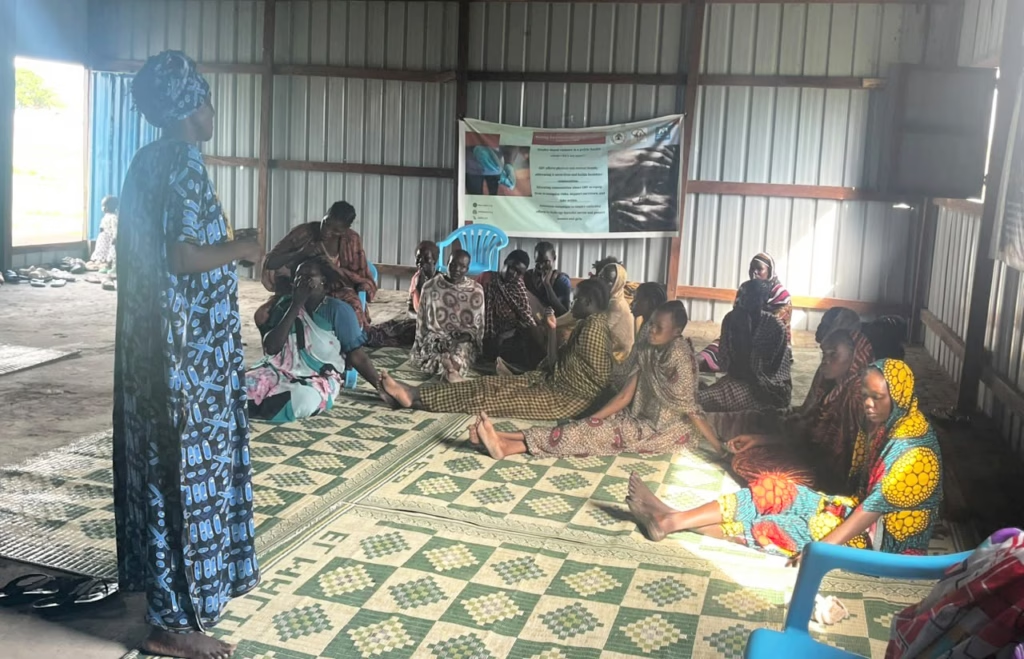
At the market in Kodok, a town along the White Nile in South Sudan, Lina James Tipo sells fruit and vegetables to support her family. The business is a significant change for the 42-year-old mother of 10, who once relied on selling small fish caught along the riverbanks.
“I have been suffering while taking care of the children since my husband left our family in 2020,” Lina says.
With a large family to provide for, Lina tried to find other ways to earn an income. But she lacked the money needed to open another small business. “I tried other forms of business, but I did not have the money to start,” she says.
In April 2025, Lina joined a village savings and loan association (VSLA) at an International Medical Corps-supported women’s and girls’ safe space (WGSS) in Kodok. VSLAs help members save together and borrow from their collective funds to invest in small businesses. Members also learn about financial literacy and business management.
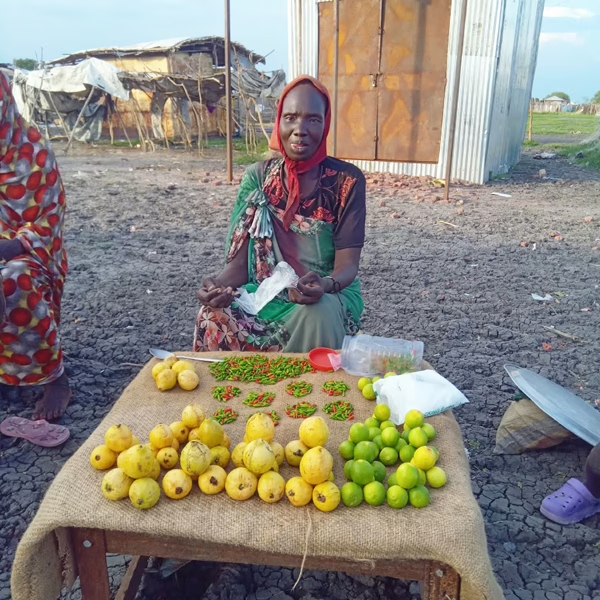
After completing the training, Lina borrowed capital from the group and used the money to expand her livelihood beyond selling fish. “I first got a loan of 250,000 South Sudanese pounds [approximately $43],” she says. “Then I started selling fruits in Kodok Market. There has been steady growth in my business since I started.”
Lina says the business now brings in between 400,000 and 500,000 SSP each month. She saves about 200,000 SSP from her monthly profits and uses the remaining income to cover food, school and medical expenses.
“Before, it was difficult because I did not have enough money to start another business,” Lina says. “Now, I can save and use my income to support my children.”
In Nyal, a town southwest of Kodok in flood-prone wetlands, Mary Nyamuoka Bol is also using savings and livelihood skills to help provide for her family.
Flash floods destroyed Mary’s home, along with many of her family’s belongings, and submerged much of their farmland. With food prices high in Nyal, Mary and her husband have relied heavily on small-scale livelihood activities to meet their children’s needs. One of their children studies at a university in Juba, while the other five attend school in Nyal.
In April 2026, Mary started visiting an International Medical Corps-supported WGSS in Nyal, where she received psychosocial support and livelihood-skills training, and attended information sessions on addressing violence against women and girls. She also learned practical skills such as embroidery, crocheting, weaving, basketmaking and knitting.
The safe space became a place where Mary could find support and learn. “When I feel stressed, I go to the women’s and girls’ safe space, where I can talk to someone,” she says. “I feel better and relieved from the stress.”
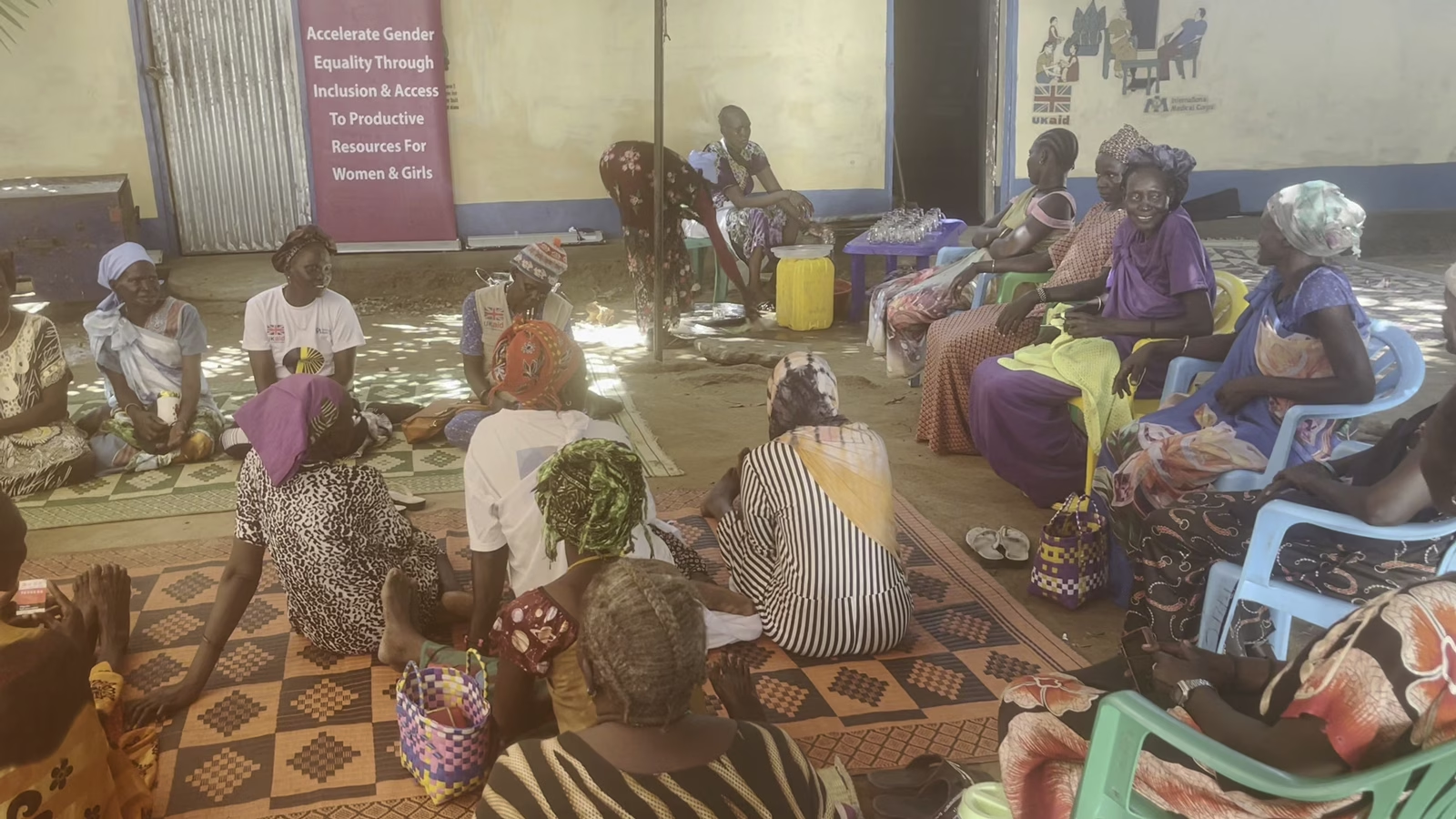
Mary also joined a VSLA, where she has saved for the past two years. The group shared its savings twice during the first year, then decided to save for a full year before dividing the funds, so members would have more time to build their savings.
“I am happy about the things that we learned here,” Mary says. “I have now learned how to save my own money, borrow loans for business purposes and repay them with interest.”
Mary started a kitchen garden after attending the WGSS and joining the VSLA. She also received a cash grant of $100 that she used to purchase seeds and other business supplies. Her garden, savings and other activities have strengthened her ability to contribute to the household: she now sells vegetables from her garden, using the income to buy food, pay school fees and cover medical expenses.
Though Lina and Mary live in different parts of South Sudan, both have used new savings, skills and access to capital to create more reliable ways to support their families. Lina hopes to continue expanding her fruit-and-vegetable business and dreams of opening a restaurant. Mary says she will continue to grow vegetables, save with other women and apply the practical skills she has learned.
Learn about other women who became entrepreneurs and our work in South Sudan.